Table Of Content
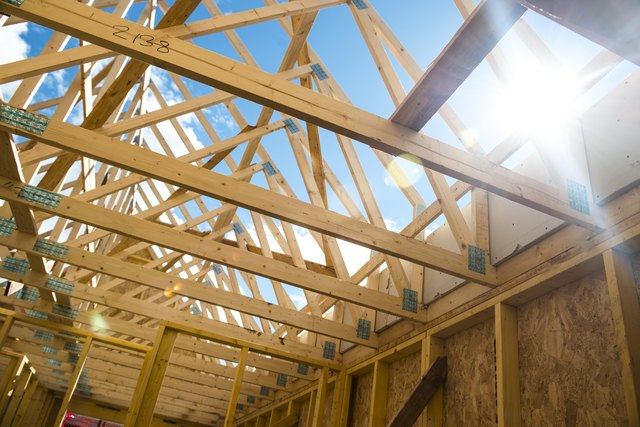
The growing popularity of roof trusses as an alternative to rafters is due to a couple of reasons. However, the biggest reason that trusses are so popular is because they are roughly 30% cheaper than rafters. Since they are constructed out of lighter materials they are both produced and purchased in large quantities, which, in turn, lowers the price. Flat trusses are used for flat roofs, generally on commercial buildings.
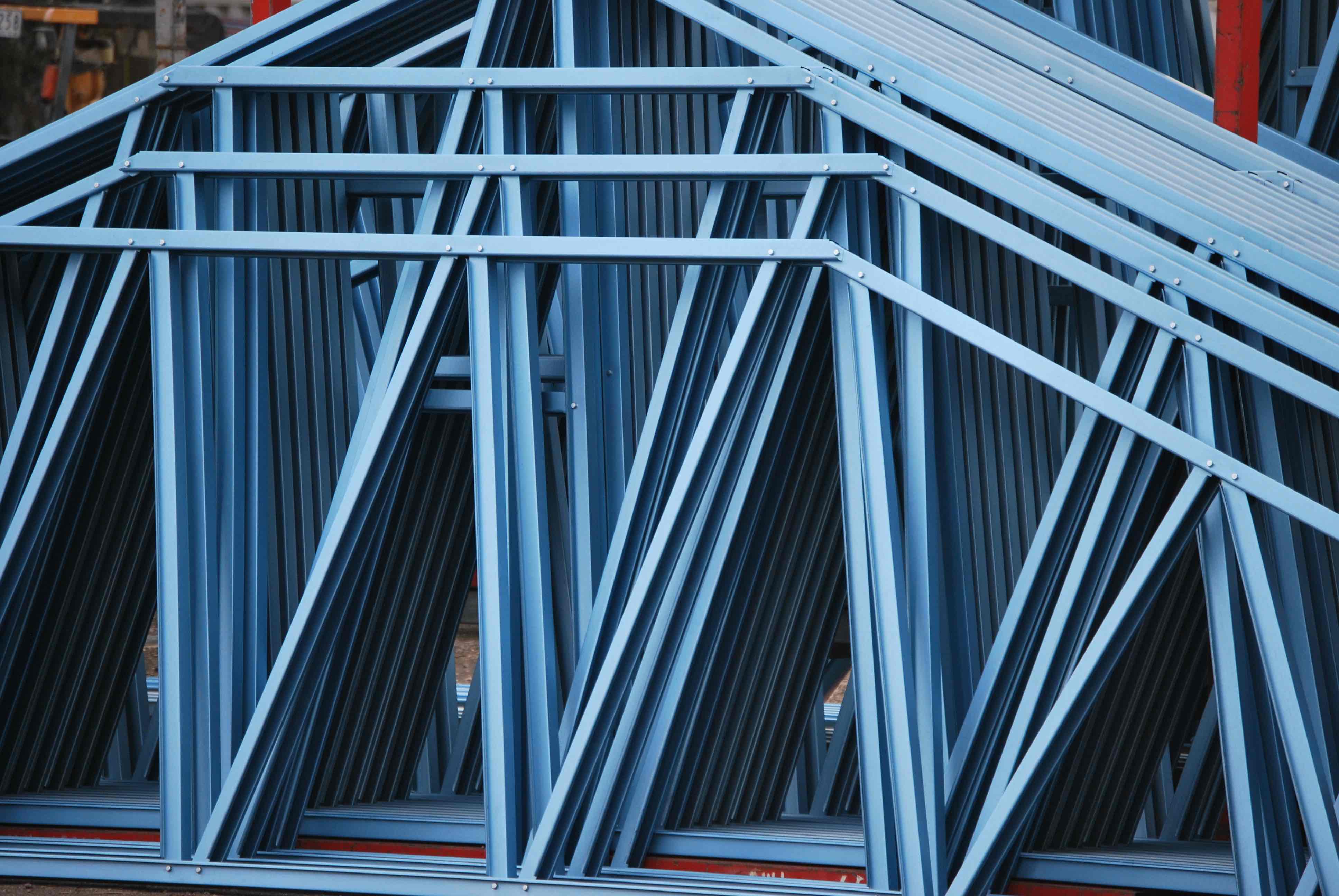
Common Roof Trusses: Everything You Need to Know
They can be built for longa spans, but a heavy truss with larger spacing may be more economical for this purpose and may even be so for spans under 50 ft. Flat trusses (Fig. 3.5) are less efficient than either the pitched or bowstring type. They are preferable only if a relatively flat roof surface, particularly on with multiple spans, is desired. Top chords that have been mechanically laminated with nails, bolts, or both are sometimes used for bowstring trusses. The section will usually be larger than that needed for a glued-laminated member, but it will also be more suitable for field lamination. A truss is typically a triangular structure that is connected by pinned joints such that they mainly incur an axial force.
Live Load
Framed walls tend to be covered by sheet goods, for example, plywood or drywall. Framing a stud wall at 16 or 24 inches OC will result in the edge of a vertical sheet falling over the center of a stud, as 48 is divisible by both 16 and 24. Thanks to this, the edge of the sheet is securely supported and backed by about ¾ inch of wood, which we can use for nailing.
Types of Heavy Equipment Used in Construction
A truss is essentially a framework of triangles held together by metal plates. Triangles are inherently rigid; unlike rectangles and other polygons, it’s impossible to alter the shape of a triangle without changing the length of one of its sides. Gable trusses will cost anywhere from 25% to 50% more than standard-style trusses.
Double Pitch
Amish-run company in Easton uses lasers to build trusses - The County
Amish-run company in Easton uses lasers to build trusses.
Posted: Wed, 15 Apr 2020 07:00:00 GMT [source]
They help span short distances and are best for additions, garages, or other small spaces. This free online roof truss calculator is a truss design tool that generates the axial forces, reactions of completely customizable 2D truss structures. It has a wide range of applications including being used as a wood truss calculator, roof truss calculator, floor joist calculator, scissor truss calculator or roof framing. Trusses are typically modelled in triangular shapes built up of diagonal members, vertical members and horizontal members. The shape of the exterior triangle and the composition of the wooden webbing inside the truss are two factors that can affect a roof’s form and support.
We’re experts at understanding the difference between dead loads and live loads, and we’ll ensure your truss design will weather whatever is thrown at it. As you begin learning about roof trusses, you’ll find that the truss’s structural height must be larger than the height of similar structures that use solid beams – rather than triangles. The size of the beams, and their angles, allow for excellent roof drainage and water tightness.
In addition, you’ll find at the button the total length of all your truss parts. In fact, the use of north light trusses to enhance natural daylighting can help reduce operational carbon emissions in industrial structures. As a result, they reduce the need for artificial lighting and the risk of overheating. The north light truss is most suited for industrial buildings but can also work in homes that desire a durable solution with proper ventilation.

As we will see below, there are several different types of designs, and this will impact the angles and designs of the overall truss. From kingpost, double fink, and dual pitch, to Polynesian, cambered, and bowstring, the amount of roof truss types is substantial. In this guide, we’ve broken down exactly what roof trusses are, what the most common types of roof trusses are, and why they’re so advantageous. Simply add nodes, members and supports to set up your model, apply up to 5-point loads (distributed loads can be added in full version), then click solve to run the static 2D truss analysis. It is particularly useful as a steel bridge truss design software or roof truss calculator. Click 'Reactions' or 'Axial Force' to display your results in a nice, clean and easy-to-interpret graph for your truss design.
Builders also can’t drill holes or notches into joists because that compromises their structural integrity. As a result, roof trusses are often a better option for larger structures or very heavy roof materials. A scissor truss, also called a vaulted truss or cathedral truss, is an A-frame structure that connects two triangular legs with a top beam.
Trusses are structural elements that can carry loads with relatively long spans compared to beams. Trusses are characterized by having tensions and compression members. These structures are often used in roof, floor and bridge structures. Whether you’re building from scratch or matching into an existing roof, we can supply roof trusses bespoke to your measurements. However, the downside is that king post trusses do not have the ability to span long distances, spanning between five and eight meters.
From metal roofs to asphalt shingles to vaulted ceilings and flat roofs, there is likely a truss that can help you get the job done. Again, there are a ton of trusses available to complete your building project. We’ve compiled a list of some of the most commonly used roof trusses for home construction.
Some of the most common types of roof trusses include fink trusses, gambrel trusses, and scissor trusses. Flat trusses are the most common type of roof truss, accounting for 30% of the market share. They are simple and easy to build, and they are a good choice for homes with low-slope roofs. Gambrel trusses are also a popular choice, accounting for 20% of the market share.
A roof trust is built off-site and shipped to the construction site. A joist is a horizontal beam that provides structural support and prevents the “A” shape in a roof rafter from twisting and falling. Joists are placed along the ceiling, run horizontally to connect a series of parallel rafters, or bear weight as part of a ceiling or floor (or both, in an attic).
From gable roofing, to hip roof sections, there is a truss that will meet your needs. We will be using an L shape (AISC) section for the roof truss, isolating the critical truss (spaced at 3.33m) and analyzing it as a simply-supported truss assembly. The simplest truss with only one central vertical post, two rafters, and a tie beam. While this article focuses on configurations, we also have a very cool set of illustrations showcasing the different parts (anatomy) of roof trusses here. The longer your shed is, the more roof trusses you will have to make. The good thing about roof trusses is that they are simple to construct.
Most importantly, roof trusses are economical – they use construction materials efficiently and allow for easy transportation and assembly, especially compared to other roof structuring options. In a truss, the bottom chord and the top chord are under tension and compression forces as a result of the loads on the roof. Which chord carries tension and which carries compression depends on the direction of the overall loading on the truss. The loads on the truss are generally in a downward direction, but may turn upward during extreme wind.
To start your calculations, you need to choose from the two options mentioned above. In the field above the illustration, pick either "rafter length" or "truss count". To ensure that the rafter and the bottom chord fit together and are attached securely, you can use stop blocks and end blocks.


No comments:
Post a Comment